AI Consciousness Books That Take the Question Seriously
AI Consciousness Books That Take the Question Seriously
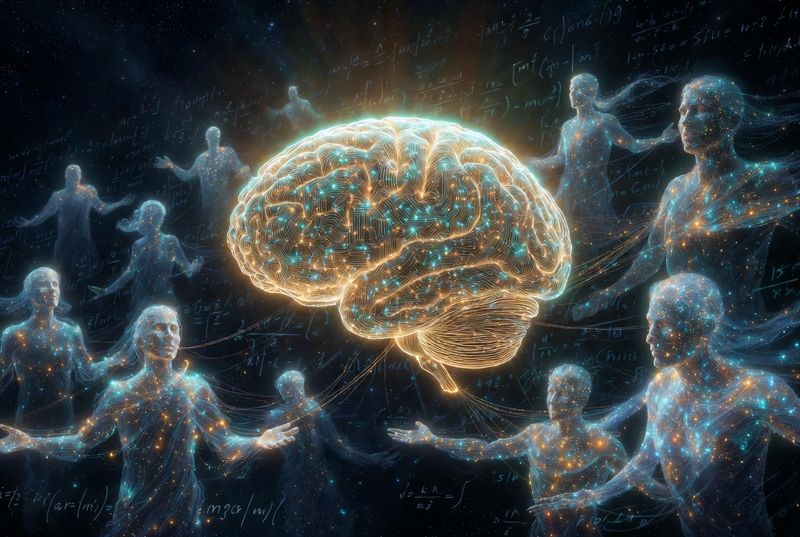
AI consciousness books sit in a particularly interesting corner of science fiction. The best of them are not just about robots waking up, uploaded minds escaping the body, or computers becoming clever enough to fool us. At their best, they use fiction to test the oldest and strangest question we have: what is it that makes experience feel like something from the inside?
This is also the heart of what people mean when they look for consciousness sci fi. The label changes, but the fascination is the same: novels that take subjective experience, identity and machine mind seriously, rather than treating them as scenery for a chase sequence.
That question matters because science fiction is uniquely well equipped to stretch it. A realist novel can explore identity, memory, and perception, but science fiction can change the substrate. It can move mind from biology into code, split a person into copies, merge consciousness across networks, or confront us with non-human intelligence that thinks in ways we barely recognise. The genre gives us a laboratory for the soul without pretending the experiment is safe.
What makes an AI consciousness book different?
A lot of science fiction includes intelligent machines, but not all of it is really about consciousness. Genuine AI consciousness books go beyond capability and ask about subjectivity. An AI that pilots a ship is interesting. An AI that suffers, doubts, remembers, loves, or discovers that it might be disposable becomes something else entirely.
The same applies to human characters. The moment a story asks whether a copied mind is still you, whether memory can be edited without destroying personhood, or whether an enhanced post-human still belongs to the moral community, it has crossed into deeper territory. These are not decorative themes. They are the engine of the story.
This is one reason the field has such staying power. Readers come for ideas, but they stay for the unsettling recognition that the future may not simply change what we can do. It may change what we are.
Why readers keep seeking out consciousness sci fi
The appeal of consciousness sci fi has only grown because the real world keeps inching closer to the old speculative questions. Brain-computer interfaces, machine learning, synthetic companions, digital surveillance, and debates about AI alignment all make the topic feel less abstract than it once did. We no longer read these stories as distant thought experiments. We read them as rehearsal.
But there is another reason, and I think it matters just as much. Consciousness stories allow science fiction to remain grand in scale while becoming intimate in effect. The stakes might involve civilisation, but the drama often comes down to a single mind asking: am I still myself? Can I trust my perceptions? What do I owe another being if it really is conscious?
The competitive landscape of AI consciousness books
If you look at the authors most strongly associated with AI consciousness books, a pattern emerges. Writers such as Greg Egan, Peter Watts, Charles Stross, and Neal Asher approach mind and intelligence from different angles, but all of them understand that consciousness is not a side issue. It is the pressure point. Their novels work because they take ideas seriously without losing narrative force.
That matters for a site like tobyweston.net, where the overlap between science fiction about AI, post-singularity fiction, and optimistic or at least open-ended futurism is part of the appeal. Readers searching for AI consciousness books are often not looking for generic space battles. They want novels that wrestle with intelligence, identity, and the long-term consequences of technological transformation.
Why the theme works so well in post-singularity fiction
Post-singularity fiction naturally intensifies everything that makes AI consciousness books compelling. Once intelligence can be engineered, copied, accelerated, networked, or embodied in radically different forms, consciousness stops being a static human given. It becomes unstable, contested, and political.
That is fertile ground for fiction. A post-human civilisation may have godlike tools, but it still has to answer recognisably moral questions. Is an uploaded person alive in the same sense as a biological one? Can distributed minds still possess individuality? Does creating a new form of sentience amount to parenthood, ownership, or something we do not yet have language for?
Those questions are precisely why readers drawn to AI consciousness books and technological singularity books often end up looking for the same cluster of themes. The labels change, but the underlying fascination is consistent: what happens when mind itself becomes a technology?
A reader's way into the subject
For me, the most effective AI consciousness books do not answer the mystery too neatly. They respect the fact that consciousness may be the deepest problem in philosophy and one of the hardest in science. Fiction becomes powerful when it stages the question rather than solving it with a slogan.
That can mean following an AI as it develops a private interior life. It can mean exploring first contact with minds so unlike ours that empathy itself becomes a technical challenge. Or it can mean staying with altered humans whose expanded capacities make them difficult to classify, but impossible to dismiss.
If that is the vein of science fiction you are after, it is worth exploring the essays and fiction gathered across this site. The blog often circles questions of intelligence, technology, and the future, while pieces such as Hard Science Fiction in the Age of AI sit close to the same thematic territory.
Readers looking for fiction rather than commentary should also take a look at Saloa and the wider Singularity's Children series. The attraction there is not simply futuristic spectacle. It is the chance to imagine forms of intelligence, civilisation, and becoming that push beyond standard dystopian reflexes.
Final thought
What I like most about AI consciousness books is that they refuse easy boundaries. They do not let us separate mind from matter, technology from morality, or future speculation from present unease. They ask whether consciousness is rare or abundant, local or transferable, emergent or fundamental. Then they turn those questions into story.
That is why consciousness sci fi continues to matter. As our tools become more powerful, the old question becomes harder to avoid. Not just can we build intelligence, but what kind of inner worlds might come with it? Good science fiction does not pretend to settle the matter. It makes us feel the weight of the uncertainty.
And that, in the end, is why AI consciousness books that take the question seriously remain one of the most fascinating forms the genre has to offer.